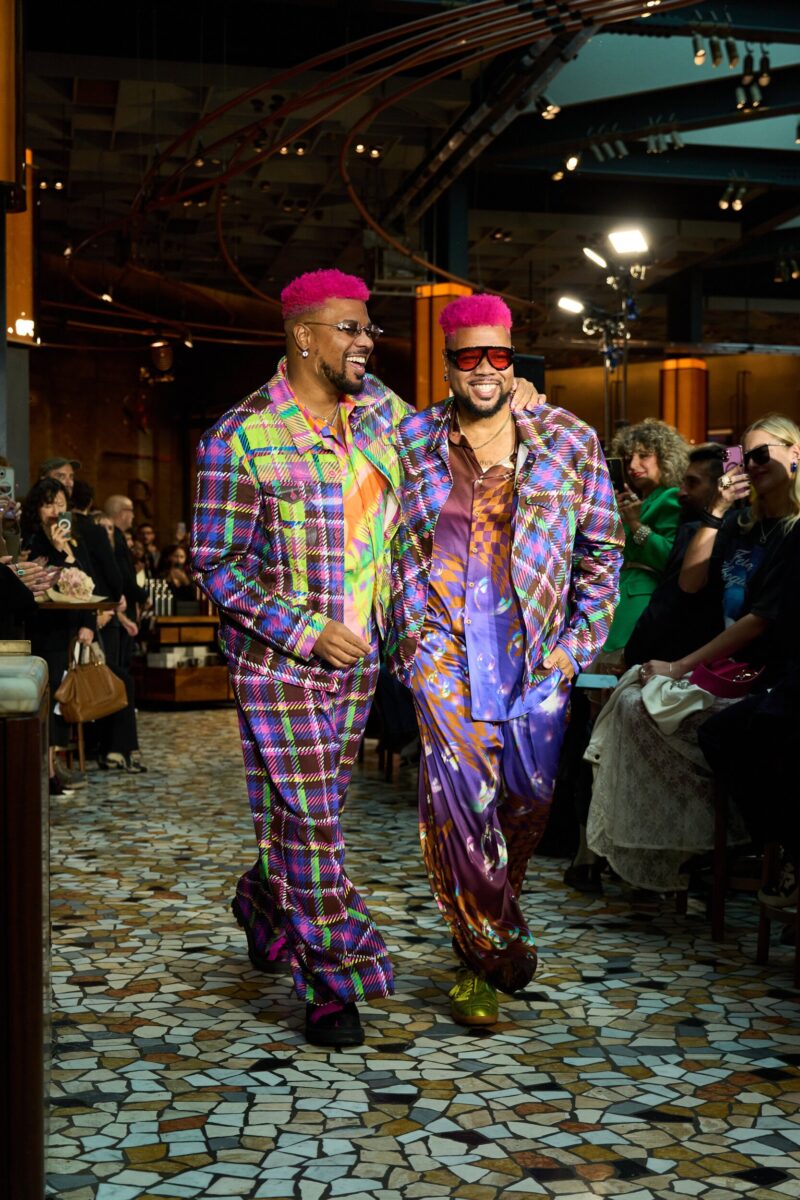
Dynamic twin designers Bruce and Glen Proctor have never created from a shallow place. Long before their designs lit up runways, red carpets, and editorials with explosive color and sculptural detail, the identical duo from Washington, D.C. were building a world where fashion and faith could exist in the same sentence — unapologetically.
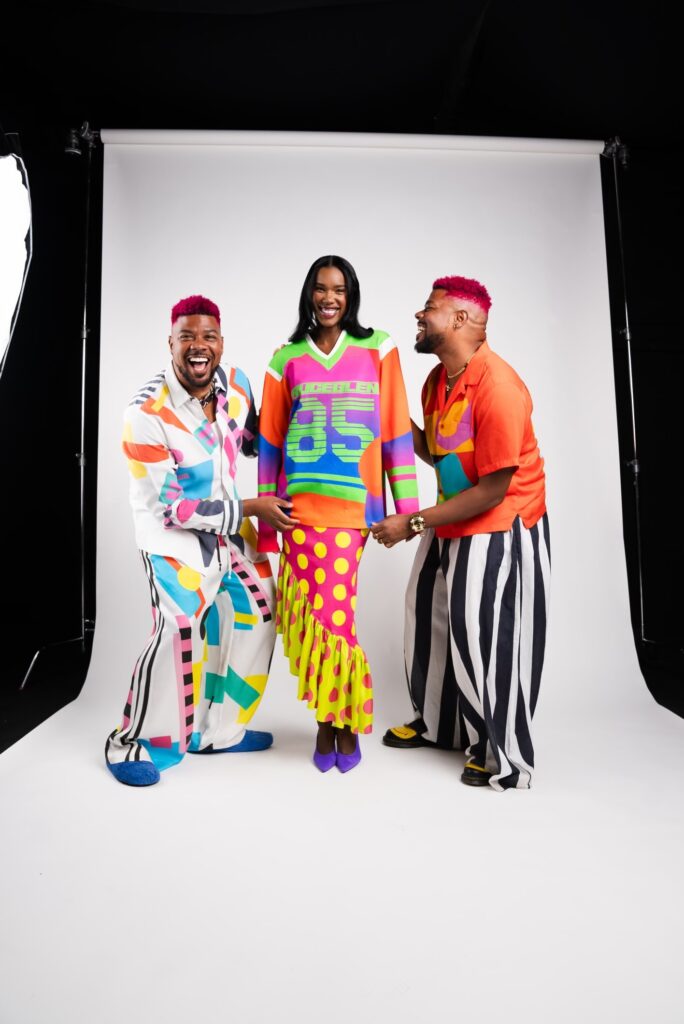
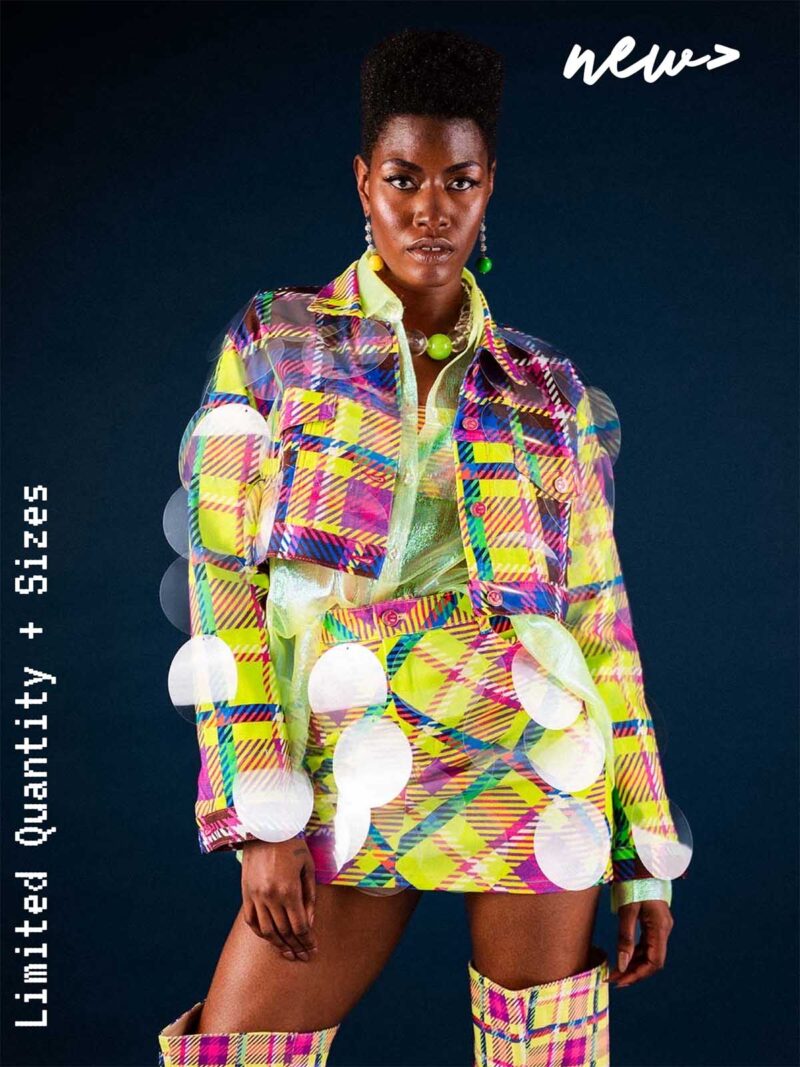
Known as the creative force behind BruceGlen, the twin designers have become instantly recognizable for their electric prints, bold hardware, architectural silhouettes, and unwavering point of view. But beyond the spectacle of the garments is a deeper language — one rooted in spirituality, purpose, and the belief that clothing can do more than dress the body. It can shift the spirit.
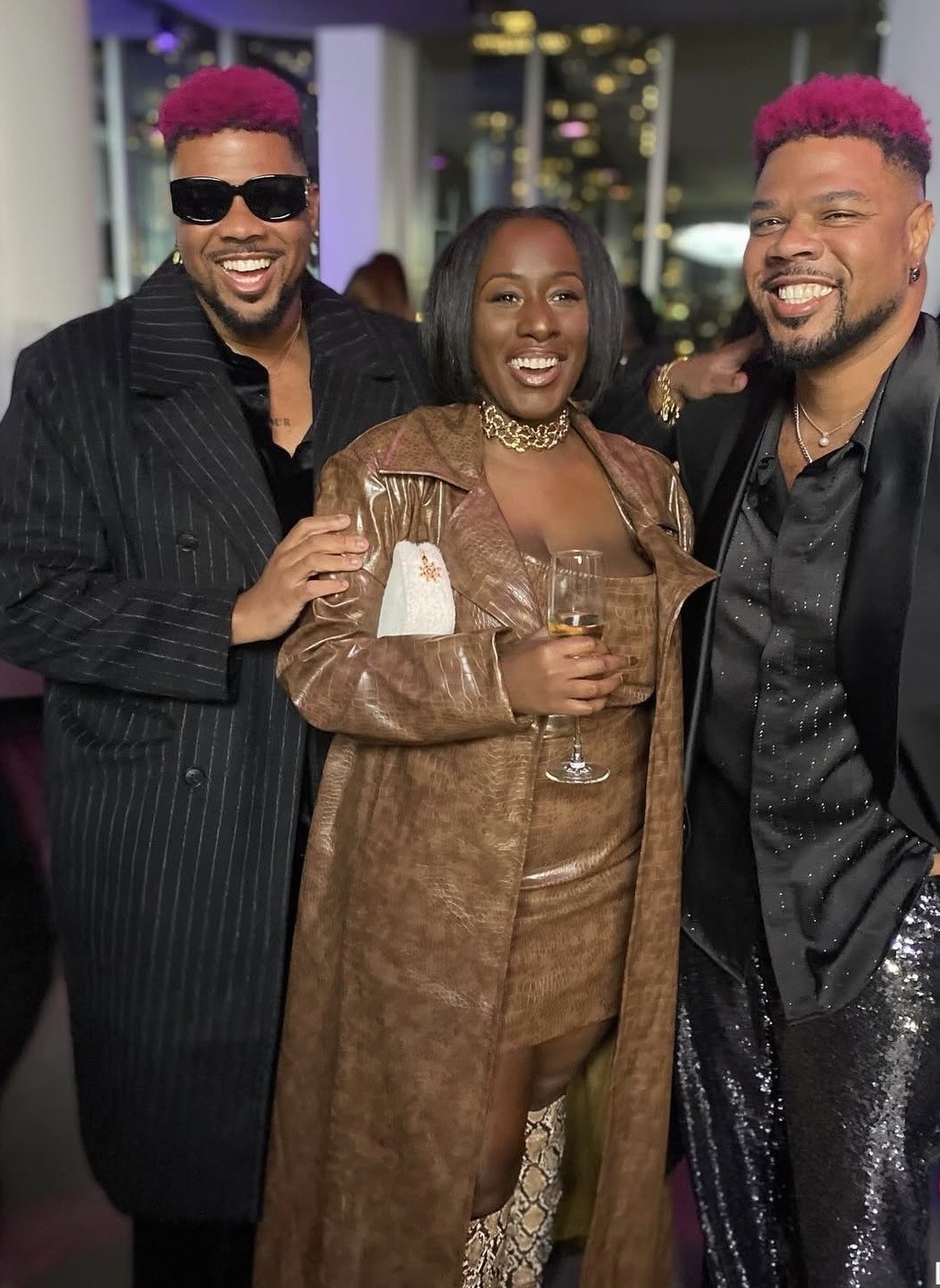
This season, Modern Stitches Founder, Ashley Scarboro had the opportunity to catch up with the twins following a fabulous introduction at The FABY’s, hosted by Claire Sulmers of Fashion Bomb Daily. In conversation, Bruce and Glen opened up about faith, pivots, peace, disappointment, sustainability, and the deeper meaning behind the BruceGlen universe.
Check out the interview below!
The Making of the “Fashion Preachers”
The title “Fashion Preachers” didn’t begin as a branding exercise. It found them.
While working in fashion early in their careers, the twins were greeted by someone in the industry with the phrase, “What’s going on, Fashion Preachers?” The nickname stuck — and, in many ways, revealed something they were still learning to understand about themselves.
At the time, the idea of being both deeply involved in ministry and deeply immersed in fashion felt almost contradictory. For many people, the creative industry is often framed as incompatible with faith. But Bruce and Glen have spent decades proving otherwise, building careers in fashion while remaining rooted in their spiritual identity.
Glen Proctor puts it plainly:
“Who we are spiritually makes up the total of our lives. What inspires the collection usually is directly related to where we are spiritually and what God is showing us and the lessons He’s teaching us.”
That spiritual alignment doesn’t just influence their personal lives — it shapes the garments themselves.
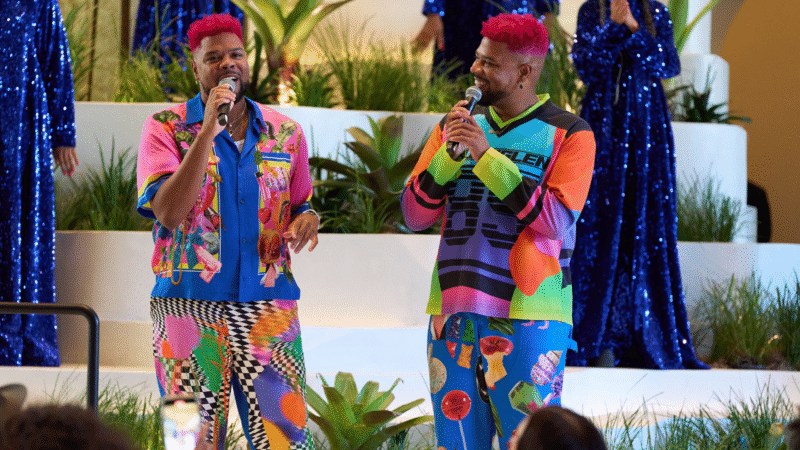
“Our collections became a sermon to us, and preaches back to us,” Glen says. “It reminds us to apply and implement the things that God is teaching us.”
That may be the clearest way to understand BruceGlen: not simply as a fashion label, but as a visual ministry of sorts — one where joy, boldness, healing, and self-expression are stitched into every seam.
Learning to Be Present
For years, BruceGlen was built amid the relentless pace of New York City. The twins spent over a decade in the city, immersed in its speed, pressure, and grind. But eventually, the cost of constantly moving, constantly striving, and constantly producing began to show up in their health — mentally, physically, and emotionally.
Their move to Los Angeles marked a reset.
In LA, the twins found something that had become increasingly difficult to access in New York: stillness. Space. Breath. Time. The shift wasn’t just geographic — it was spiritual and emotional, too. They began learning how to live in the present rather than in pursuit of what was next.
That lesson now lives inside the BruceGlen ethos.
Peace, for them, isn’t the absence of ambition. It’s the discipline of not being consumed by comparison, pressure, or digital urgency. It’s the choice to slow down and trust that what is meant for you will arrive in its time.
They speak candidly about how easy it is, even for the strongest person, to look online and wonder why they aren’t somewhere else, doing something else, moving faster. But their lives — and their faith — continue to remind them that divine timing is rarely chaotic.
Bruce Proctor says it best:
“If that door that you were expecting to be it, doesn’t open up, it’s okay — don’t worry about it. Go with the flow, don’t fight.”
That surrender has become part of their design language, too. BruceGlen’s collections may be loud in color and silhouette, but beneath that visual exuberance is a softer message: trust, release, and live fully where you are.
The Starbucks Years and the Beauty of the Grind
There is also tenderness in how they reflect on their earlier years — especially the seasons that didn’t yet look successful from the outside.
The twins remember spending countless hours at the same Starbucks, working on the brand, sending emails, researching, trying to make sense of their ambitions while also balancing ministry, Bible study, and evangelism. It was a period filled with uncertainty, drive, and the kind of internal pressure that many creatives know personally.
That chapter, though difficult, became foundational. It built grit. It sharpened vision. It revealed what it really means to keep going when there’s more fire than clarity.
And now, from where they stand, they can look back and see that those years weren’t wasted — they were preparation.
The Grace to Pivot
One of the most compelling truths Bruce and Glen offer is their openness to pivoting — not just in career, but in life.
In an industry that often pressures creatives to remain fixed, consistent, and easily marketable, the twins embrace change as a natural part of growth. For them, pivoting is not failure. It’s discernment.
Bruce Proctor says:
“(Pivot) Every day if need to! There are tiny and big pivots — the ones that are life changing and you don’t know what’s next. But with God’s grace we are getting more and more to the point to have peace in the pivot.”
He continues:
“He will speak to us about the pivot and we can make the pivot happen, rather than the pivot happening to us.”
That perspective feels especially resonant for emerging creatives, stylists, designers, and multi-hyphenates who may feel pressure to stay inside one lane for the sake of clarity or branding. BruceGlen’s career stands as a reminder that evolution is not a detour. It is often the design.
On Disappointment, Timing, and Dreaming Bigger
Even with years of success, high-profile collaborations, such as their Gap x Harlem’s Fashion Row collection launch last year —and increasing visibility, Bruce and Glen are clear: disappointment doesn’t disappear just because progress has arrived.
They still experience moments that don’t unfold the way they hoped. They still hold dreams that haven’t yet materialized. They still navigate the tension between vision and reality.
But what has changed is how they hold those disappointments now.
Glen Proctor shares:
“We still have them. Realize it’s all in perfect timing.”
And for Bruce, that trust is what keeps the dream intact without letting frustration harden it
“If it’s God’s will then it will be.”
Glen adds simply:
“And that’s how we deal with the moments that could be disappointing.”
Bruce expands on the importance of perspective:
“We also need to be reminded how far we’ve come. We have so many dreams and ambition. We still have the same fire since the beginning where we would sit for hours at that Starbucks. Some of it has materialized but it’s still so much we want to do and so much we’re believing God for to change and contribute to the world.”
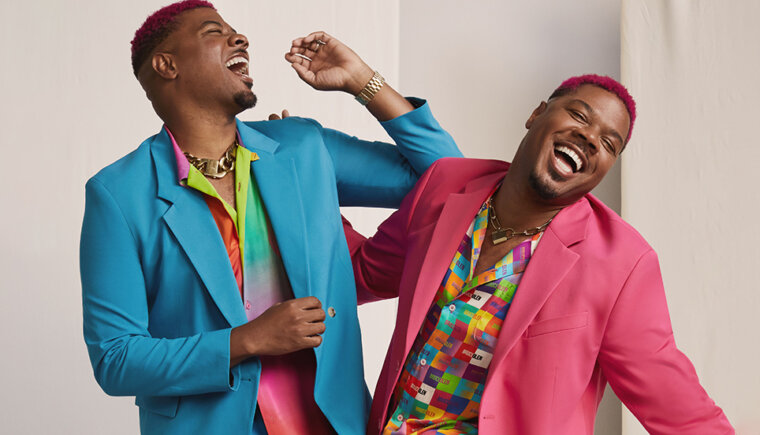
That balance — gratitude for what exists, hunger for what’s next — is perhaps one of the most honest portraits of creative longevity.
You Are More Than One Thing
BruceGlen has never been about shrinking to fit an industry label. Bruce and Glen are designers, yes — but they are also ministers, speakers, storytellers, and cultural visionaries. Their work reflects a larger truth they hope more people embrace: you do not have to choose only one expression of yourself.
Bruce Proctor says:
“Once you get to begin to understand who you are, whatever you touch, that will resonate through it. If it’s clothing, hosting, TV, music and literature.”
That understanding of identity as the root — rather than the title — allows for expansion without confusion.
Glen Proctor adds:
“Every single person has so many gifts in each person, things we don’t know we have to be discovered. The boldness to explore your creative freedom is about discovering all the treasures inside you.”
That philosophy feels central not only to their brand, but to their testimony. The deeper work, they suggest, is excavation — taking enough time away from the noise to discover what is already inside you.
In a culture obsessed with speed, performance, and external validation, that invitation feels radical: pause long enough to meet yourself fully.
And perhaps even more powerfully, trust that you already possess what you need.
As Glen says:
“You got it! You have the things you need to get the things you want.”
When Copying Turned Into a Pivot
The fashion industry has long had a complicated relationship with originality, and BruceGlen has not been exempt from that reality.
When a mainstream clothing company released a design that closely mirrored one of their pieces, the twins were already aware of it before the internet fully caught on. At first, they tried not to dwell on it. But the situation became more personal when someone reached out after purchasing the item, only to discover it appeared to replicate BruceGlen’s original work.
That moment clarified something for them: their designs had made an impact significant enough to be imitated — but more importantly, it gave them another opportunity to pivot.
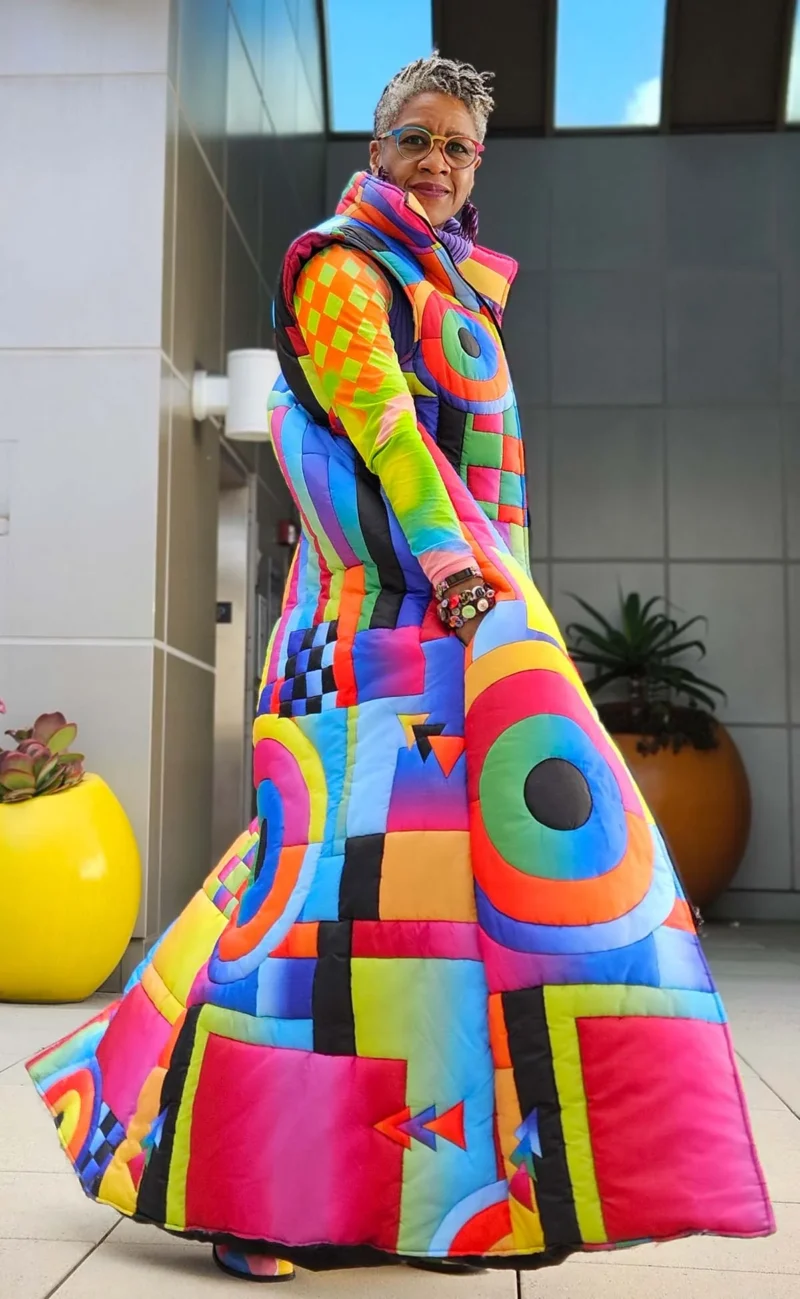
Rather than staying in frustration, they found a way to produce the original vest in a more accessible and intentional way. What was once a piece too expensive to bring to market was reimagined through a new manufacturing process, allowing them to offer it as a custom pre-order while preserving its original detail.
It was a reminder of something their story keeps proving again and again: setback is often just redirection in disguise.
Rethinking Sustainability Through BruceGlen’s Lens
Sustainability has become one of fashion’s most overused words — flattened, marketed, and often stripped of its deeper implications. Bruce and Glen offer a more layered perspective.
They are candid in saying they did not initially set out to become a “sustainable brand” in the way the industry often defines it. But their approach to creation, production, and resourcefulness naturally led them there.
As they explain it, sustainability is embedded in how they’ve always had to think and make.
Their production partnership in the Dominican Republic has become part of that larger commitment. Through made-to-order manufacturing, BruceGlen is able to reduce excess inventory while supporting more thoughtful production cycles. Their manufacturing process also incorporates fair wages, lower energy usage through skylit facilities, and water recycling practices in the printing process.
Even here, they are still evolving. Sustainability, for BruceGlen, is not a static badge — it is an ongoing process of refinement and responsibility.
And true to form, they are already preparing for the next pivot.
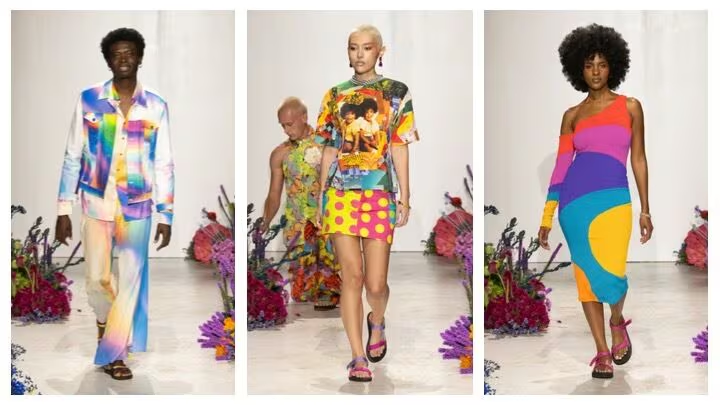
A Love Letter to Boldness
When asked what they hope BruceGlen represents years from now, the answer is less about accolades and more about permission.
Permission to be seen. Permission to be expressive. Permission to reject the narrow expectations that so often shape how Black men, in particular, are expected to show up in the world.
Growing up in Washington, D.C., they understood early how restrictive those visual codes could be — how style, especially for Black men, is often policed through an unspoken “uniform.” BruceGlen was born, in part, as a refusal of that limitation.
It became a love letter to the children they once were. To the parts of themselves that wanted to be louder, freer, softer, brighter, and more fully expressed. And over time, their audience has reflected that back to them.
Customers who once hesitated now speak about the joy and confidence they feel once they actually put the garments on. People who once believed they were “too much” are discovering that perhaps they were never too much at all — only underexpressed.
That, perhaps, is the real BruceGlen legacy.
Not just the clothes. Not just the prints. Not just the hardware or the runways or the red carpets.
But the feeling. The permission. The healing.
As Glen reflects, the hope has always been bigger than fashion.
“When we first started we would pray that even our clothing would heal people.”
And that is exactly what BruceGlen has always been trying to do: not simply dress people, but restore them to themselves.